
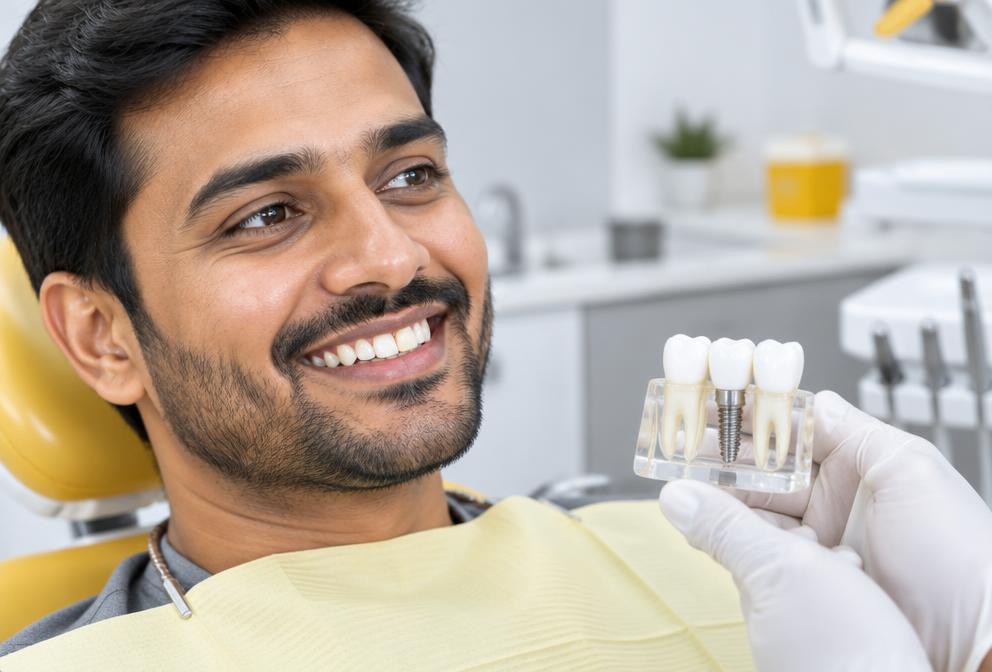
Single Tooth Replacement
One missing front tooth or molar replaced without grinding down the healthy teeth beside it.
Single tooth implant →Implant centre · Vesu, Surat
Get your chewing power back with Dr. Adit Vekaria (M.D.S.), periodontist, implantologist & laser surgeon. Implants are planned on your gum and bone condition first — because that is what decides whether they last.
Consultant: Dr. Adit Vekaria, M.D.S.
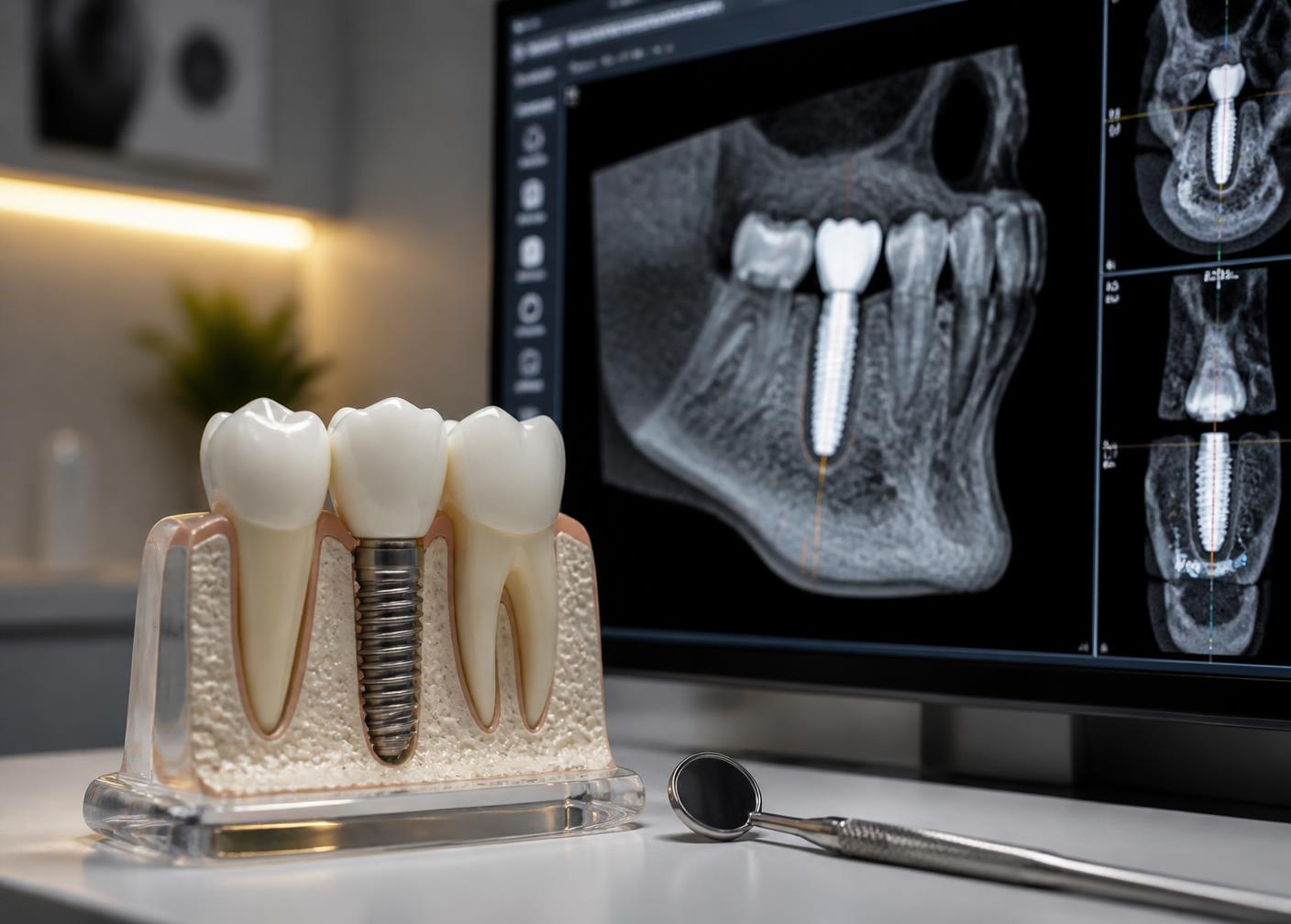
The basics
An implant is not a fake tooth stuck onto the gum. It is a replacement tooth root, anchored into the jawbone, so the tooth on top behaves like a natural tooth instead of a denture resting on tissue.
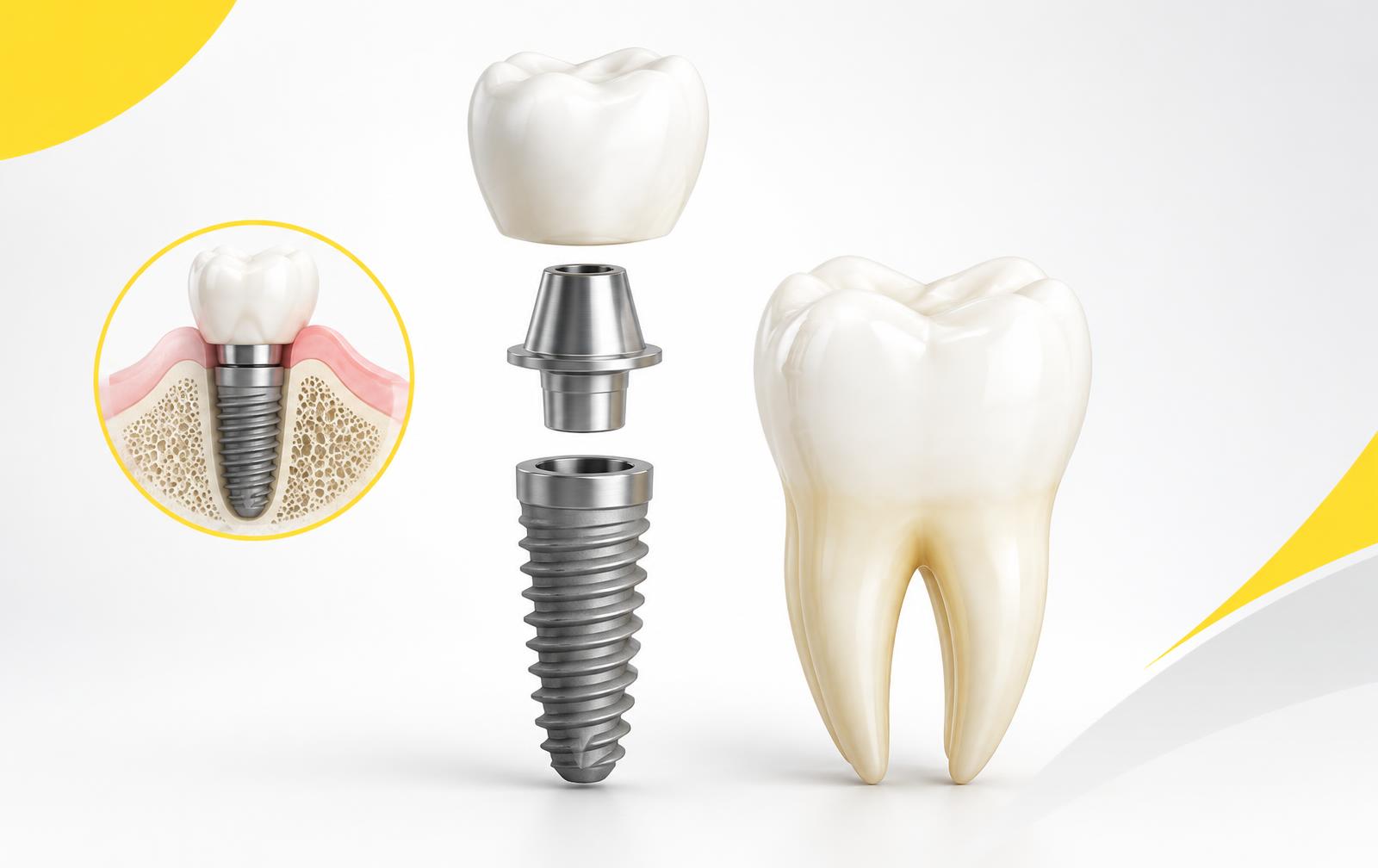
A small titanium screw placed gently into the jawbone. It becomes the new root of your tooth.
The connector that sits on the implant and holds the final tooth firmly in position.
The visible tooth, shade-matched to your natural teeth in ceramic or zirconia.
How they work · the science
Titanium is biocompatible, so over roughly three to four months your own jawbone fuses to the implant surface — a process called osseointegration. That fusion also keeps the bone in the area loaded and healthy, instead of shrinking away as it does under a denture.
Read how implants workWhy upgrade
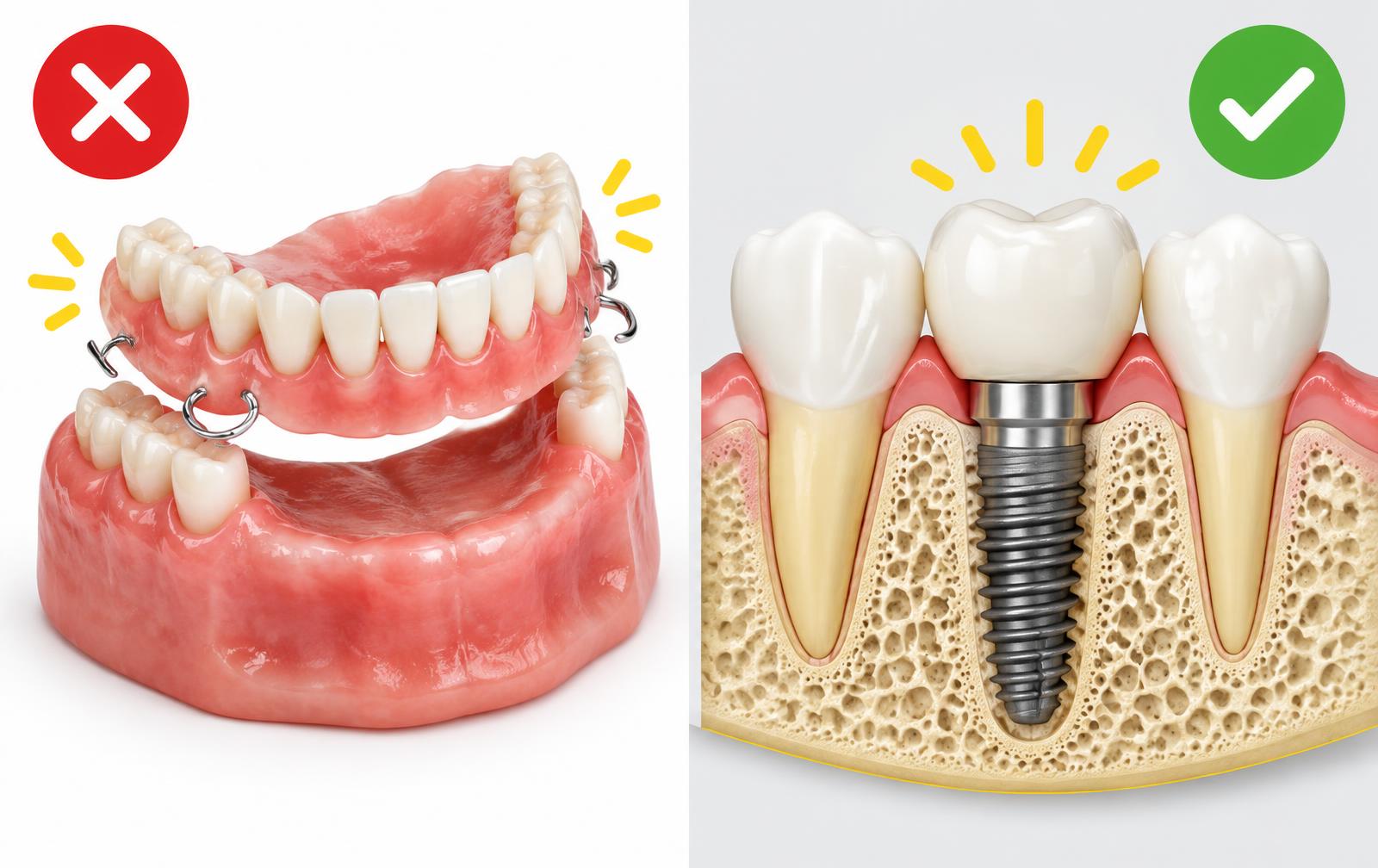
Dentures and bridges still have their place, and they are offered here when they are the right answer. But they solve the visible problem, not the missing root.
Treatment options
From a single gap to a complete arch, the plan is built around your bone volume, gum health and bite.
One missing front tooth or molar replaced without grinding down the healthy teeth beside it.
Single tooth implant →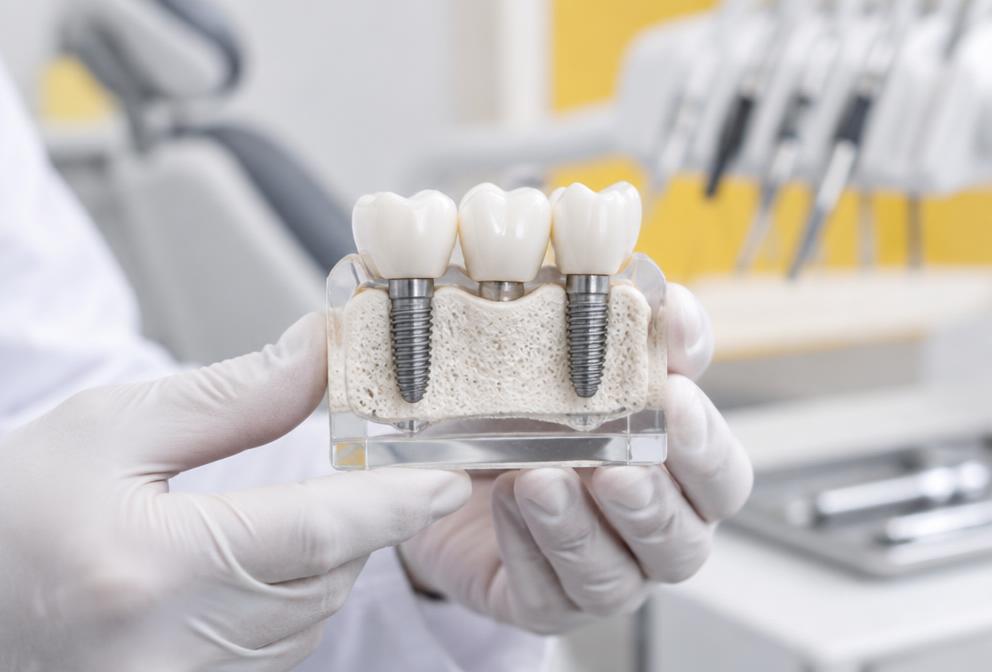
Missing three or four teeth in a row? Two implants can support a fixed bridge and restore bite strength.
Bridge options →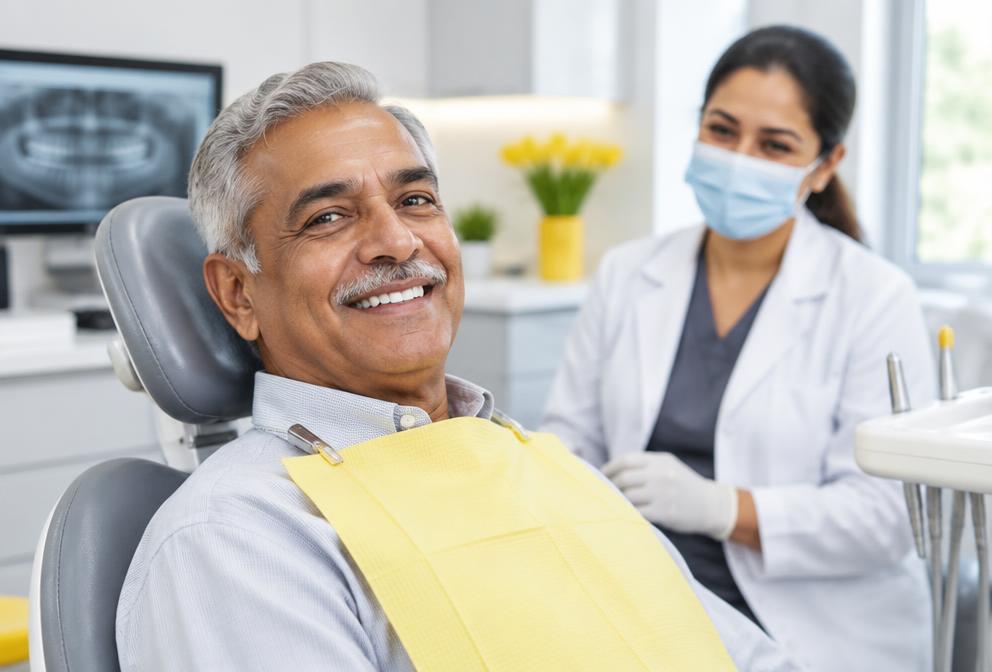
Fixed full-arch teeth on implants for patients who have lost, or are about to lose, all their teeth.
Full mouth implants →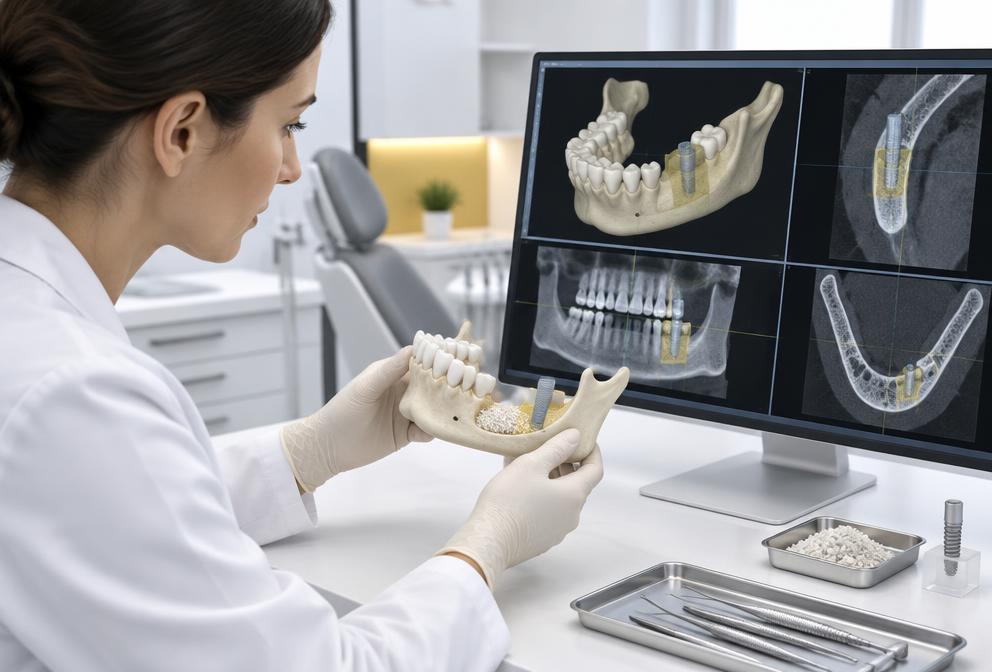
Guided bone regeneration and sinus lift procedures make implants possible where bone is deficient.
Bone grafting & sinus lift →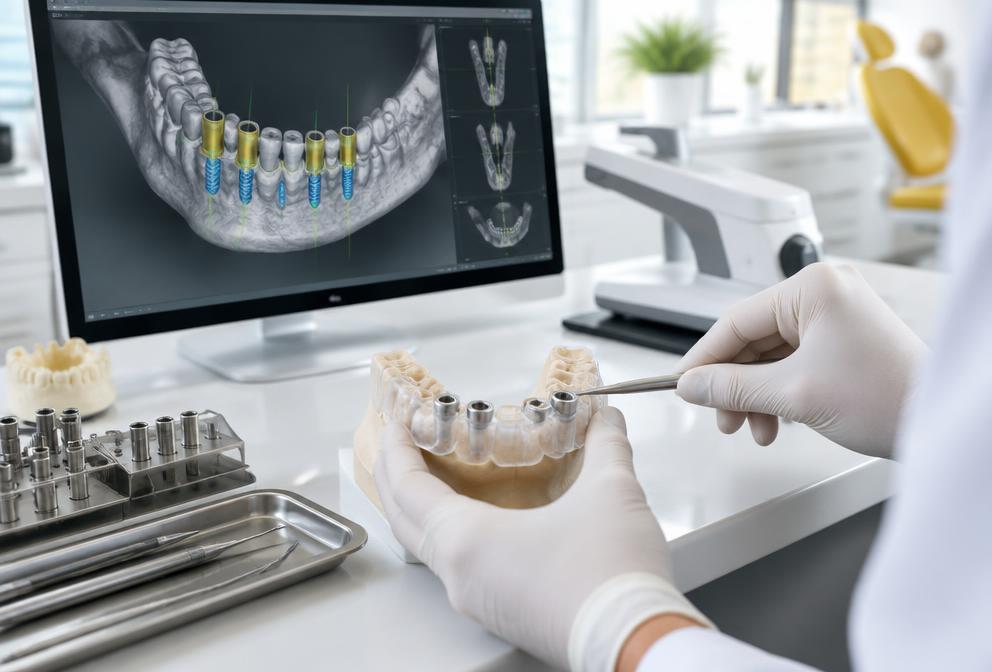
Planning on 3D imaging so the implant goes exactly where the bone allows — less trauma, faster healing.
How guided surgery works →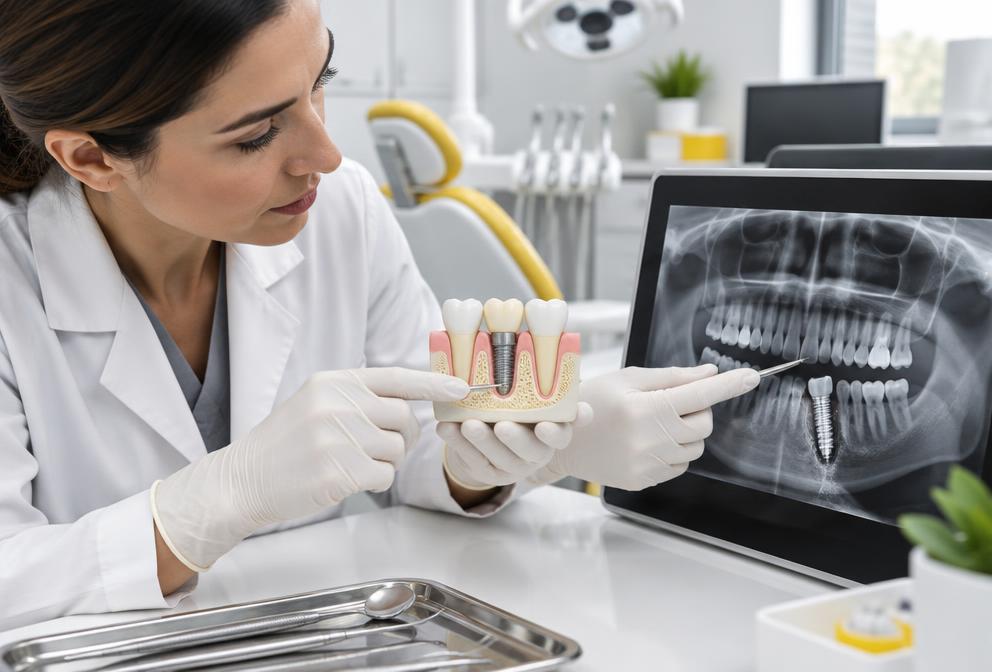
Implants placed elsewhere that have become loose, painful or infected are assessed and managed here.
Failed implant care →Eligibility
Most adults with missing teeth are candidates. Medical conditions usually need managing, not refusing — but you will be told plainly if implants are not in your interest.

Well-controlled diabetes is not a barrier. Sugar levels are reviewed before surgery and a strict healing protocol is followed.
There is no upper age limit for implants. Overall health and bone condition matter far more than age.
Smoking slows healing and gum disease destroys bone — both are managed first, then implants are planned honestly.
Comfort
Fear of pain is the most common reason people delay implant treatment for years. Technique and honest communication remove most of it.
Where anatomy allows, implants are placed through a small, precise opening instead of a wide flap — less bleeding and quicker recovery.
Surgery is done under local anaesthesia so the area is completely numb. Most patients compare it to a simple extraction.
Appointment-based scheduling means you are not rushed. Every step is explained before it happens.
Why choose us
Dr. Adit Vekaria, M.D.S., is a periodontist, implantologist & laser surgeon — the specialist trained in the gum and bone that hold an implant in place.
Meet your specialist →Implant systems used here are internationally certified, with documented components available for years to come — never unbranded fixtures.
202, Aakash Retail, Above Ropeway Restaurant, Near Prime Shoppers, Vesu, Surat. Surgery, prosthetics and long-term maintenance all happen in the same place, with the same team.
Directions & timings →“Our only goal is to deliver painless, predictable and long-lasting dental solutions with utmost care and honesty.”Dr. Adit Vekaria, M.D.S.
Difficult cases
Long-standing missing teeth, advanced gum disease or a failed implant elsewhere do not automatically close the door. They change the sequence of treatment.
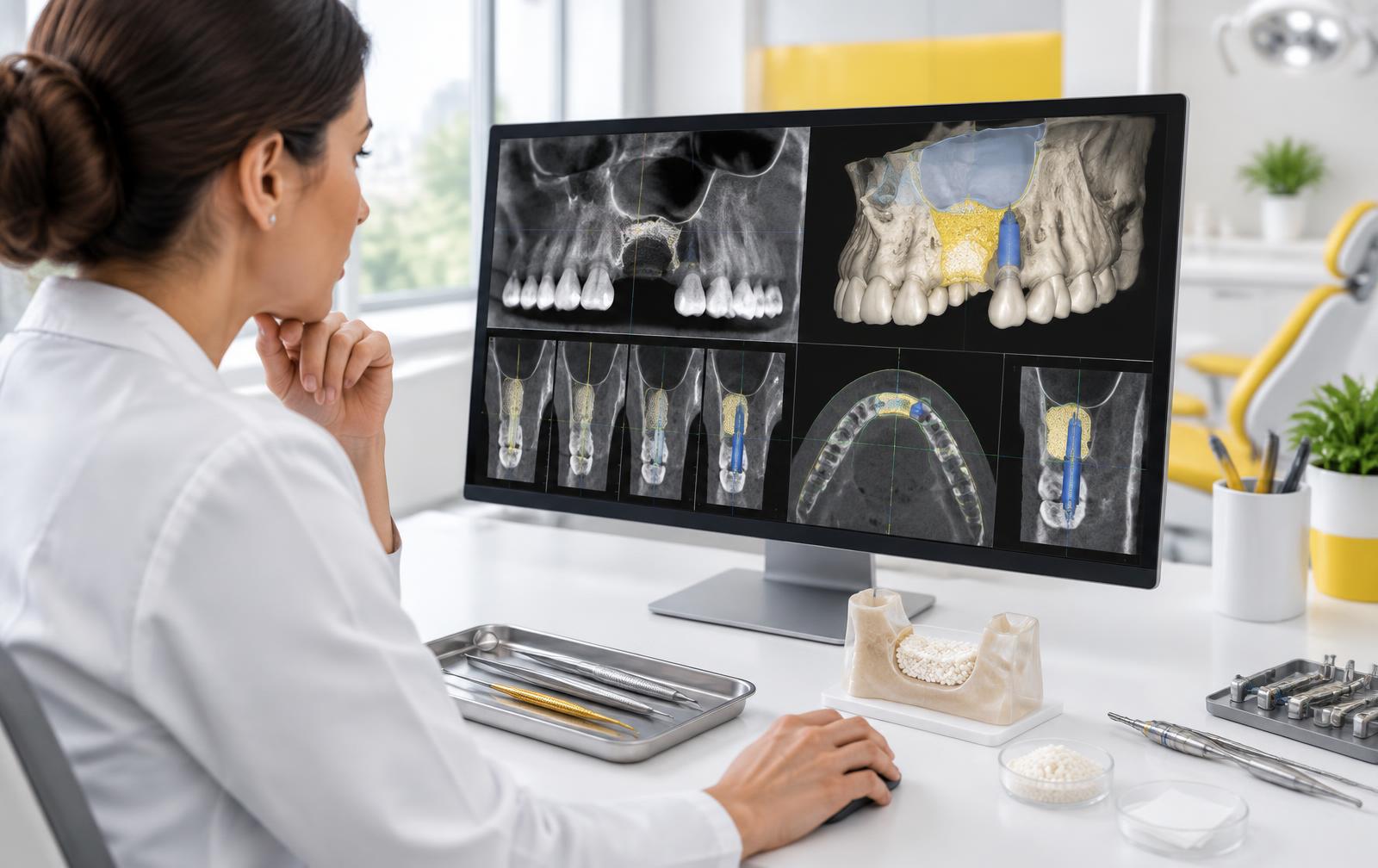
Ridge augmentation rebuilds width and height; a sinus lift creates room in the upper back jaw.
Learn more →Active periodontal infection is treated before any implant is placed, so the new tooth is not built on inflamed tissue.
Learn more →Loose or infected implants are assessed, removed if needed, the site healed, and re-implantation planned.
Learn more →Common questions
The surgery itself is done under local anaesthesia, so you feel pressure at most, not pain. Mild soreness for two to three days afterwards is normal and is managed with routine medication.
Placement usually takes under an hour per implant. Bone then fuses with the implant over roughly three to six months before the final tooth is fitted. Temporary teeth are provided wherever indicated.
An implant kept clean and reviewed regularly can last decades. Long-term success depends far more on gum maintenance and hygiene than on the brand of implant used.
Usually not. Reduced bone height or width can often be rebuilt with guided bone regeneration, ridge augmentation or a sinus lift, and implants placed in a staged plan.
No. Titanium and zirconia are non-magnetic. Implants do not trigger airport security and are safe during MRI scans.
Soft food on the day of surgery, a soft diet for about a week, then gradually back to normal. Hard nuts and very tough food are avoided for the first few months.
Cost depends on the implant system, the crown material and whether bone work is needed. A written, itemised estimate is given before treatment starts. Call or WhatsApp +91 8200908022 for a consultation.
Take the first step
Bring your previous X-rays, reports or treatment plans. You will be told clearly whether implants are the right answer for your case — and what it will involve.